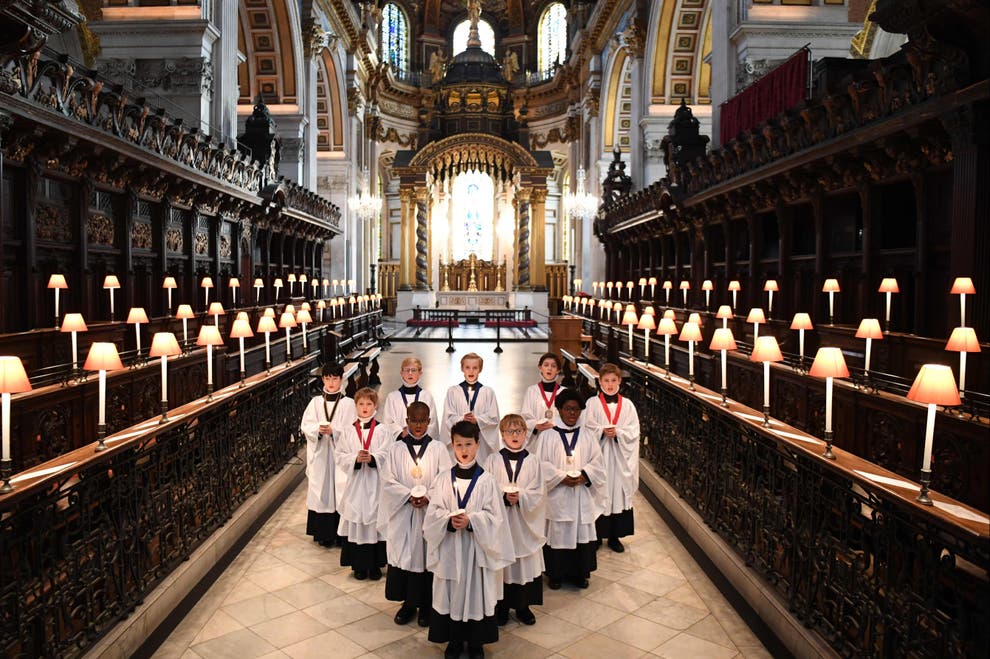



THE Government’s exemption of public worship in the new lockdown, which started on Wednesday, is meeting resistance from clergy in areas where the number of coronavirus infections is highest.
At least one diocese, Chelmsford, has recommended that all services go online only. On Monday night, the Prime Minister announced a third lockdown in response to rapidly rising Covid-19 infection rates, hospital admissions, and deaths. The new restrictions, which might last until March, state that no one can leave their homes except under special circumstances, which include work that cannot be done domestically, exercise, legal matters, and childcare. As before, the vulnerable are advised to shield at home. In contrast with the first lockdown, however, new guidance published shortly after the announcement states that public worship is exempt from the new rules: “You can leave home to attend or visit a place of worship for communal worship, a funeral or event related to a death, a burial ground or a remembrance garden, or to attend a wedding ceremony.”
Weddings can be held, but only in exceptional circumstances (such as imminent death) and with up to six people. (The figure does not include those conducting the wedding.) The limit on funerals remains at 30; the number permitted at a wake is no more than six. As before, face coverings are mandatory in all indoor settings, including places of worship. Shortly after Boris Johnson’s announcement, the Bishop of London, the Rt Revd Sarah Mullally, who chairs the Church of England’s Covid-19 recovery group, stated: “Some may feel that it is currently better not to attend in person, and there will be parishes which decide to offer only digital services for the time being. Clergy who have concerns, or others who are shielding, should take particular care and stay at home.” The Vicar of St John’s, Hampstead, in north London, Canon Jeremy Fletcher, tested positive for Covid-19 after a Christmas-morning service, together with a colleague and a visiting cleric. “We had to be entirely online last Sunday as we were isolating, and have decided to be online only through January,“ he said on Wednesday. “Rates here are one in 30, and we don’t want to encourage non-essential gatherings. Online is feasible for the majority here, and those who choose not to join have been happy to be remote. People on the other side of the digital divide are in contact in other ways, and there had been no overwhelming pressure to be open, though it was clearly appreciated when we were.”
St John’s is considering whether the church building should remain open for private prayer, as it has been for two hours each day. “I wish the Government had shut places of worship for gatherings of more than for private prayer. It would seem that even the most rigorous risk assessment is powerless in the face of the new variant, and human behaviour,” Canon Fletcher said. The Vicar of St James’s, Malden, in south London, the Revd Katie Thomas, was unequivocal, telling the Daily Mail: “Those who stay open at the climax of a pandemic — without any evidence on safety requirements for the new strain — are putting their parishioners, their cleaner, public-transport employees, and the NHS at risk.” Some churches in currently high-risk areas are opting for a combination of public worship and online services.
The Vicar of St Mary’s, Battersea, in south London, Canon Simon Butler, said that his church had not wanted to close public worship fully, but that the seriousness of the situation had led the churchwardens, clergy, and employed staff to take urgent steps.
About The Author

Harrison Okafor
editor
Judith is a believer, a lover of Christ and a Gospel freak person. A passionate gospel blogger and press writer. I work with GospelHitsNaija.net Media, no 1 Gospel music platform.