


Parliament’s unanimous in Iraq vote to make Jesus’ birth an annual holiday succeeds where other national holidays have failed.
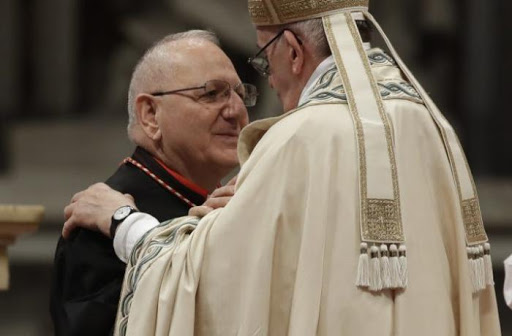
Seventeen years since the fall of Saddam Hussein, the fractious Iraqi nation divided mostly between Sunni, Shiite, and Kurdish Muslims remains unable to agree on a national day. But they can agree on Christmas. Last week, the parliament unanimously passed a law to make Christmas a “national holiday, with annual frequency.” The latter phrase gave great “joy and satisfaction” to Cardinal Louis Raphael Sako, patriarch of the Chaldean Catholic Church. Last October, he presented an official request to Iraqi President Barham Salih to make Christmas a permanent public holiday. “Today Christmas is truly a celebration for all Iraqis,” said Basilio Yaldo, bishop of Baghdad and Sako’s close associate. “This is a message of great value and hope.”
In 2008, the government declared Christmas a “one-time holiday.” In 2018, the parliament amended the law to make Christmas for all citizens. But after each occasion, it was not renewed. “The declaration is beautiful, but it is very late,” said Ashur Eskrya, president of the Assyrian Aid Society–Iraq. “But our trouble is not in holidays, it is in the situation of our people.” The Christian population of Iraq numbered roughly 1.4 million prior to the US invasion. Today, following years of war and the ISIS insurgency, Christians are estimated at less than 250,000.
Land appropriation continues in the Nineveh Plains, Eskrya said. And Christians suffer with all Iraqis the deterioration of the economy amid COVID-19 restrictions. Christian Iraqis were always allowed to celebrate Christmas themselves, he said. Those who worked for the government received two days off—and three for Easter. Eskrya lives in Dohuk, in the Kurdistan Autonomous Region, in northern Iraq. Home to the majority of Iraqi Christians, since 2003 it has similarly sometimes given Christmas as a holiday for all. But decorations fill city streets and local malls, he said, while the government provides Assyrian Christians an additional seven religious and ethnic holidays. But the Kurds are one reason Iraq cannot settle on a singular national holiday. The nation achieved independence from Great Britain on October 3, 1932, but this coincides with a day of mourning over a Kurdish icon who defied Saddam Hussein.
The dictator’s overthrow has also been proposed as a national day, but is too divisive a date within Iraqi politics.
About The Author

Harrison Okafor
editor
Judith is a believer, a lover of Christ and a Gospel freak person. A passionate gospel blogger and press writer. I work with GospelHitsNaija.net Media, no 1 Gospel music platform.