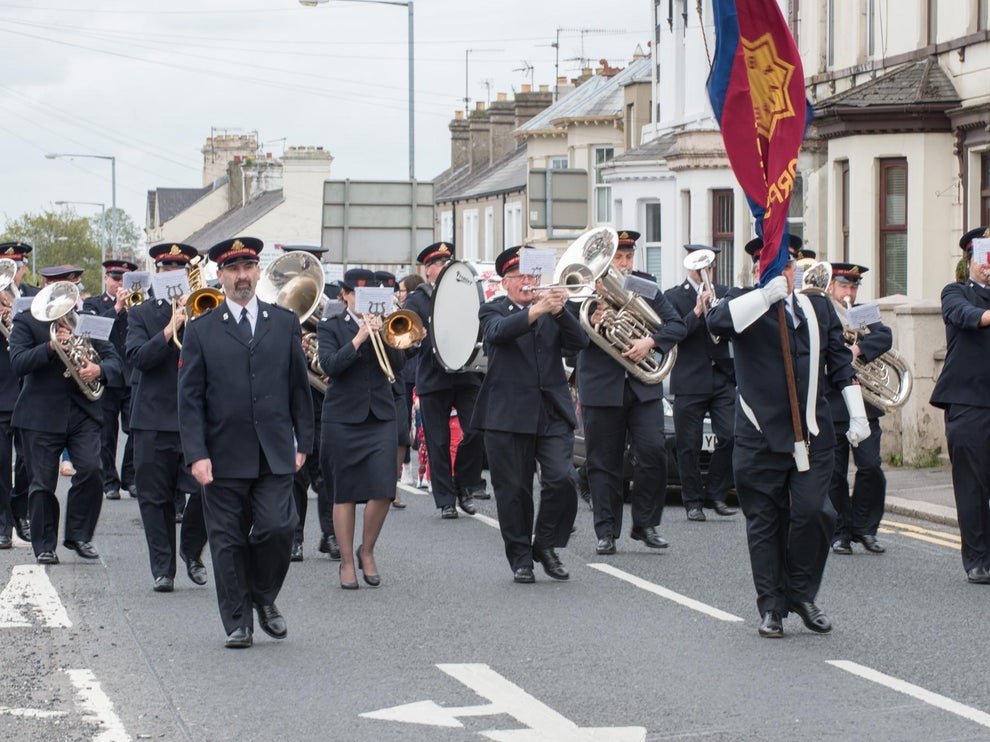



Founded in 1865 by William and Catherine Booth as the East London Christian Mission, it was reorganised in 1878 by William Booth who introduced a military-style structure with the aim of reaching out as efficiently as possible to the needy through addressing their material and spiritual needs.
The military approach reflects the urgency of that mission. The turn of the century just over 100 years ago was a time of great missionary ambition and that sense of urgency brought the different Protestant denominations together in a very cooperative spirit. In 1910, a great world missionary conference held in Edinburgh saw the many opportunities for global mission created by new means of communication and developing trade routes around the world. In his account of that great assembly of missionaries from all parts of the globe, WHT Gairdner, a celebrated Scottish-born missionary in Egypt, wrote of the world as “every day more and more closely and organically knit by the nerves of electric cable and telegraph wire; more richly fed by the arteries and veins of railway-line and steamship ocean-way”. He described the inspiration created by the awareness of “one world, waiting, surely, for who shall carry to it and place in its empty hands one faith”. Mission was global, but it was also local. It was urgent and it therefore required the most effective organisation.
While the Salvation Army had Methodist roots another similar organisation was founded by Wilson Carlile within the Church of England around the same time, then known as the Church Army (now simply as Church Army). As a student back in the 1970s I spent one summer working on placement in a Church Army hostel for young men in Putney. It was a steep learning curve, to say the least. The Salvation Army’s Belfast-based Major Imogen Stewart told me for this column about the Salvation Army’s experience of ministry in the current coronavirus situation. Asked how, with singing and playing musical instruments being at the heart of Salvation Army worship, the coronavirus regulations have impacted on the Salvation Army’s activities in Northern Ireland, she told me that restrictions had been keenly felt. She said that for Salvation Army congregations across the province “this was hard, as this is a vital part of ‘who we are’ and the way we worship”. Major Stewart added that as it was only on December 13 that the Salvation Army had been notified by the Northern Ireland executive that six socially distant people could play, this gave Salvation Army groups limited time to prepare and gather to play and sing carols in the run up to, and during, Christmas.
Many congregations have turned to online worship during the coronavirus restrictions, and this has certainly been true for the Salvation Army.
About The Author

Harrison Okafor
editor
Judith is a believer, a lover of Christ and a Gospel freak person. A passionate gospel blogger and press writer. I work with GospelHitsNaija.net Media, no 1 Gospel music platform.